Different Types of Payment Gateway: A Guide to Every Type of Payment for Your Business

For all online merchants, selecting the right payment gateway is a core decision. Currently, the wide and complex array of available gateway options is often confusing, and this guide will help you choose the optimal, well-suited solution for your needs.
Understanding What is a Payment Gateway and How It Works
A payment gateway is a payment data transfer technology that works between a website and a bank — it authorises transactions. To better understand the concept, you can read a separate detailed article what is a payment gateway. Here’s how it works: the customer enters their payment details, clicks "Pay", and the gateway sends a request to the bank. The entire process takes just seconds. Different tasks require several types of payment processing. At its core, a payment gateway is a platform that connects merchants, customers, and financial networks.
Build Your Own Gateway Without the Hassle
The Definition: Payment Gateway vs. Payment Processor
A payment gateway transmits data, while a payment processor handles settlements between banks. The gateway is a payment processing interface. The difference is explained in the article payment gateway vs payment processor. Aggregators and gateways often work together; a payment provider can combine both roles. The chosen gateway type affects integration speed and cost.
How a Modern Payment Gateway Works for Your Business
A modern gateway encrypts payment details, sends a request to the bank, and receives a response – all in real time. Payment gateways operate in real time. Reliable payment processing requires easy integration with your CMS.
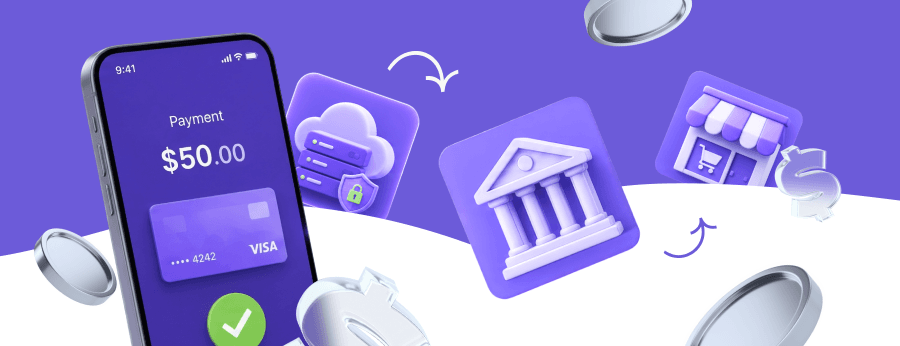
Protocols protect payment data, and sensitive payment information is not stored by the merchant. A seamless experience is possible with the right setup.
Exploring the Four Payment Gateways by Technical Integration
Currently, there is a wide variety of payment gateways on the market, which can be classified according to their technical integration. This study only focuses on four mainstream models among these options.
Hosted Payment Gateway
A hosted gateway redirects the customer to the payment service provider’s page. Payment details are collected on the gateway side – this is very secure, but conversion may drop because the user leaves your site. It is easy to install and comes with a basic payment page.
Self-Hosted Payment Gateway
A self-hosted gateway collects payment information directly on your website. The customer sees the payment form in your own design, requiring SSL and PCI DSS compliance. There is no redirect, ensuring an uninterrupted payment experience and full control.
API-Hosted Payment Gateway
The payment form is on your website, but data goes directly through a robust API. You never touch the payment data, which improves security while offering a fully customizable interface—ideal for large platforms that need full management of the payment flow.
Local Bank Integration Gateway
This gateway connects directly to a bank, offering low fees and working well with local methods like UPI. It is the right choice for a purely local market, though currencies and international payment options are typically limited.
Classification by Provider: Payment Aggregators and Payment Gateways
To understand the difference, read our article what are payment aggregators. Aggregators and gateways differ in their operating model. An aggregator combines many merchants under one master account. A pure gateway is only a technical bridge. Aggregators are quick to connect but may block accounts; direct gateways offer more stability.
Differences Between Bank Gateways and Third-Party Aggregators
The four types of payment integration affect the selection of payment service providers. Startups and large enterprises each have their own corresponding adapted solutions. Gateway integration impacts payment permissions, settlement speed, and fee structures.
Choosing the Right Payment Gateway Type for Your Industry
How to choose the best payment gateway for your niche? E‑commerce needs a self-hosted or API-hosted solution. SaaS works best with an API-hosted gateway. Digital goods often use a hosted gateway to reduce PCI burden. Always evaluate pricing, currency support, and integration complexity before deciding.
Strategic Comparison: Which Different Types of Payment are Best?
Which payment types should you offer? Mainstream options include credit cards, digital wallets, and buy now, pay later (BNPL). This selection directly affects conversion rates, and is also constrained by regional user preferences. Payment gateways can support a diverse range of payment methods, while hosted gateways support more local payment methods than self-hosted gateways.
Comparing Hosted vs. Self-Hosted Payment Gateway Solutions
Comparison from the viewpoint of total cost of ownership and risks:
| Criterion | Hosted Payment Gateway | Self-Hosted Payment Gateway |
|---|---|---|
| Security | Provider takes care of PCI DSS. Requirements are met automatically. | Full PCI compliance certification required. |
| Conversion | Lower (customer leaves your site). | Higher (customer stays on your payment page). |
| Customisation | Minimal. | Complete control over the payment interface. |
| Launch speed | Hours. | Weeks or months. |
| Cost of ownership | Low entry threshold, transaction fee. | High development and certification costs. |
The selection of a payment gateway directly impacts an enterprise’s total cost of ownership and risk profile. We recommend that enterprises conduct A/B testing to optimize payment metrics, select a gateway aligned with their own risk tolerance, and verify compliance with PCI requirements to implement data protection.
Factors to Help You Choose the Right Payment Gateway
Key selection criteria:
- A secure payment gateway is non-negotiable for any online business – look for 3D Secure and tokenization.
- Pricing – all fees (transaction, monthly, setup, cross-border).
- The gateway should integrate seamlessly with your CMS (Shopify, WooCommerce, custom).
- A gateway that supports the required currencies and methods (cards, UPI, wallets, BNPL).
- Payment success rates – real authorisation statistics.
- Reporting on payment data and reconciliation.
- Security features – 3D Secure, recurring payments, tokenisation.
- Modern digital payments – Apple Pay, Google Pay.
- Ability to test multiple gateways in parallel.
The best gateway balances fees, reliability, and customer experience. It must be secure and scalable.
Online Payment Company #1
Online payment solutions for all types of businesses since 2019


